
Holiday Stress Is Wrecking Your Sleep — Here’s How to Get Back on Track Before Thanksgiving
Holiday stress ruining your sleep before Thanksgiving? Why stress disrupts rest, weight and hormones — and simple steps that help in Delaware, OH.
Thanksgiving is still more than a week away, and I am already hearing it in the clinic: “I’m up at 2 a.m. thinking about lists, I’m exhausted all day, and then I’m wide awake again at bedtime.”
If that sounds familiar, you are not doing anything wrong. The weeks before the holidays stack up — extra spending, family plans, travel, work deadlines, and less daylight — and sleep is often the first thing to slip.
You do not need a perfect routine to sleep better this week. A few steady changes can help.
Why Stress and Sleep Affect Each Other So Much
Stress and sleep work in a loop. When you are stressed, your body stays on alert longer into the evening. Your mind races, falling asleep takes longer, and you wake more during the night.
Poor sleep then makes the next day harder. You feel more irritable and hungry, focus is harder, and small problems feel bigger. Caffeine helps you push through the afternoon, but caffeine late in the day can make the next night worse — and the loop starts again.
Over several weeks, that loop can also affect weight and hormones. Hunger cues are harder to read and cravings go up.
One rough night is normal. Two or three weeks of broken sleep, with fatigue that does not lift, is worth paying attention to.
Simple Steps That Help This Week
Start small. Pick two or three of these and do them consistently for the next week, rather than trying to fix everything at once.
- Keep a steady wake-up time. Get up at about the same time each day, even on weekends. A steady anchor helps your body feel sleepy at a predictable time at night.
- Get daylight early. A short walk, or even standing outside with your coffee, helps set your body clock — especially in Ohio in November, when days are so short.
- Move the list out of your head. Keep a notepad by the bed and write down tomorrow’s top three tasks before lights out. You are not solving them at midnight — just giving your brain permission to let them go.
- Cut caffeine by early afternoon. If sleep has been fragile, try making noon or 1 p.m. your last coffee, tea, or energy drink for a week.
- Make evenings dimmer and quieter. Lower the lights, put work messages away at a set time, and give yourself 30 minutes without news or scrolling before bed.
- Be careful with alcohol as a sleep aid. A drink can make you feel drowsy, but it often leads to lighter, more broken sleep later in the night.
What About Melatonin and Sleep Aids?
Patients ask about melatonin a lot this time of year. It is a hormone your body makes in response to darkness. A supplement can help in specific situations, like adjusting to a new time zone, but it is not a fix for stress-driven insomnia, and more is not better. It can also interact with some medicines and leave some people groggy the next day.
What helped a friend may not be right for you, especially if you take prescription medicine or have sleep apnea. If you are relying on something most nights, bring it up at a visit so we can look at the whole picture instead of guessing.
Loud snoring, pauses in breathing at night, or falling asleep during the day even after a full night in bed are also reasons to get checked promptly.
When Holiday Stress Is a Sign to Get Checked
Sometimes poor sleep is not just a busy season. Book a visit if you notice:
- Fatigue that lasts most days for several weeks, even when you get time in bed
- Brain fog, low mood, or anxiety that is getting worse, not better
- Weight changes, hair shedding, or feeling cold or wired for no clear reason
- For women, new night sweats, hot flashes, or cycle changes alongside poor sleep
- For men, low energy, low motivation, or low libido alongside poor sleep
Those patterns can overlap with thyroid, vitamin, and hormone changes. Sorting it out starts with a conversation and a review of your history. Labs are ordered based on what you are experiencing — there is no single panel that fits everyone.
Frequently Asked Questions
How long should I try sleep habits before I get checked?
If you have tried steady wake times, early daylight, and an earlier caffeine cutoff for about two weeks and are still exhausted most days, book a visit. Come in sooner if you have snoring with breathing pauses or major mood changes.
Can poor sleep really affect my weight?
Yes. Short, broken sleep makes hunger harder to read, increases cravings, and leaves you with less energy to move. Several weeks of it can make weight loss and maintenance noticeably harder.
Should I start melatonin on my own?
It is better to ask first, especially if you take other medicines. Dose, timing, and whether it fits your situation at all matter.
Ready to feel more rested heading into the holidays? Book a visit at Glow Medical Group in Delaware — book online or call (614) 392-8111.
Support Your Results
When stress is keeping you up at night, these are the shelves Sarah points to first — a wind-down shelf for sleep, plus everyday stress support for wired-but-tired days.
These statements have not been evaluated by the Food and Drug Administration. This product is not intended to diagnose, treat, cure, or prevent any disease.
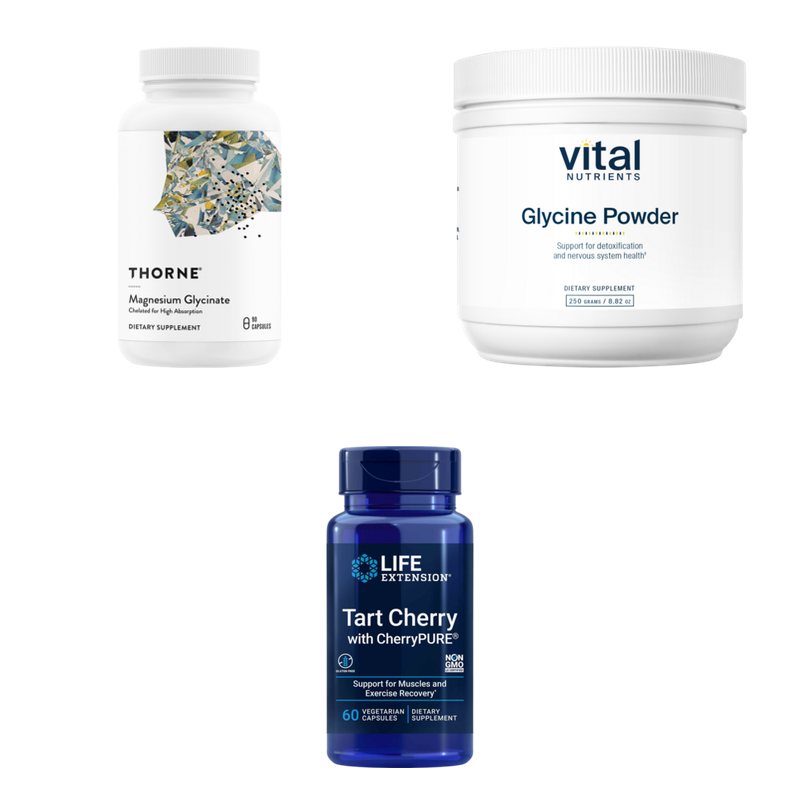
Supplement Line — Sleep & Recovery
Fall asleep easier. Wake up ready.
A wind-down shelf, not a knock-out pill. Magnesium glycinate supports relaxation and sleep quality, with glycine and tart cherry to help your body settle into its nighttime routine.
Glycine Powder 4000mg (Vital Nutrients) Available through a medical provider only
- List price$92.97
- App members — 10% off$83.67
- Auto-refill — 15% off$79.02

Supplement Line — Stress and Adrenal Support
Take the edge off the day.
For the wired-but-tired feeling. Adaptogens support a healthy stress response and steady energy, so the day feels manageable again — without another cup of coffee.
Rhodiola 3% 400mg (Vital Nutrients) Available through a medical provider only
ZenBiome Sleep (Microbiome Labs) Available through a medical provider only
B-Supreme (Designs for Health) Available through a medical provider only
- List price$190.95
- App members — 10% off$171.86
- Auto-refill — 15% off$162.31